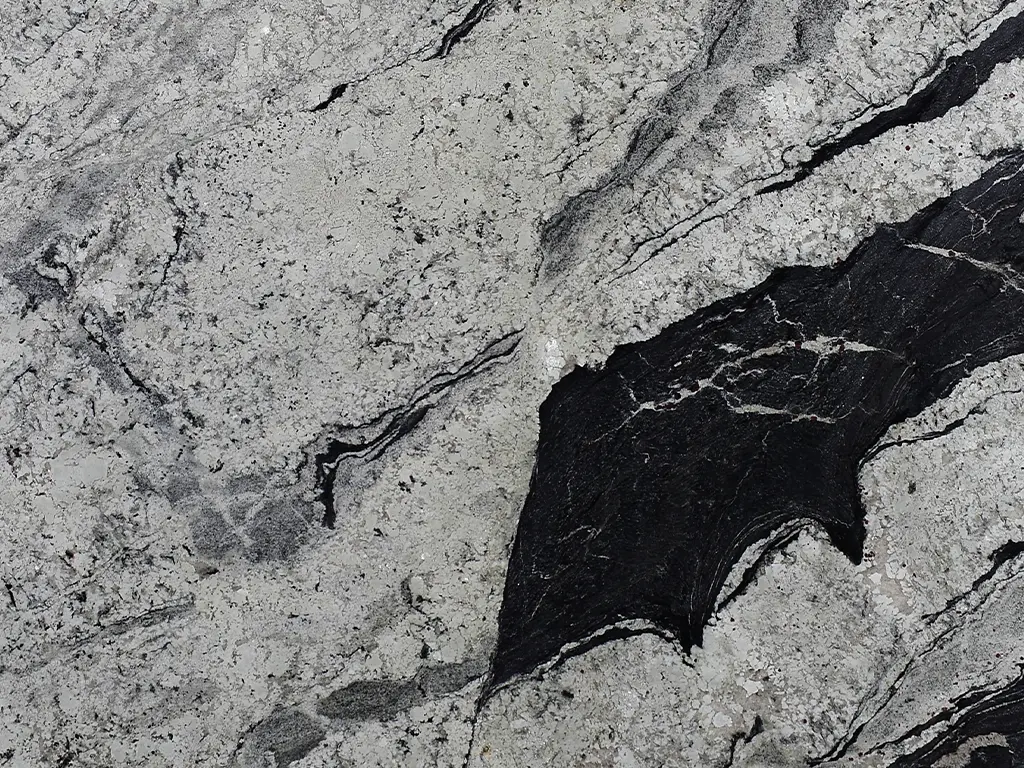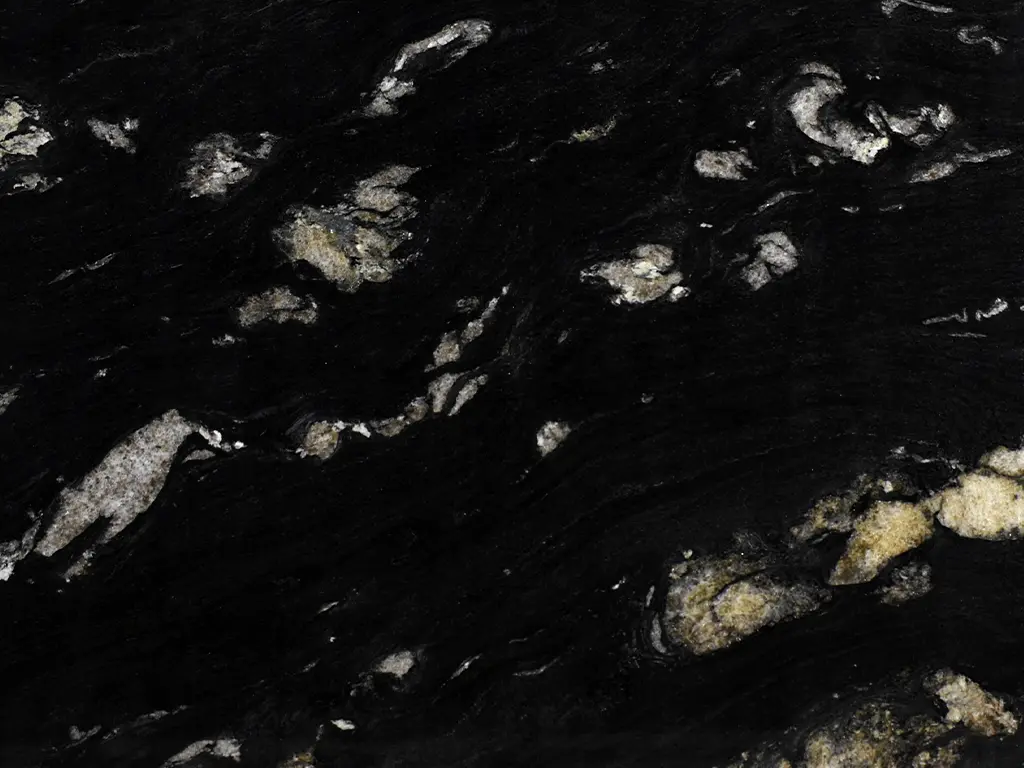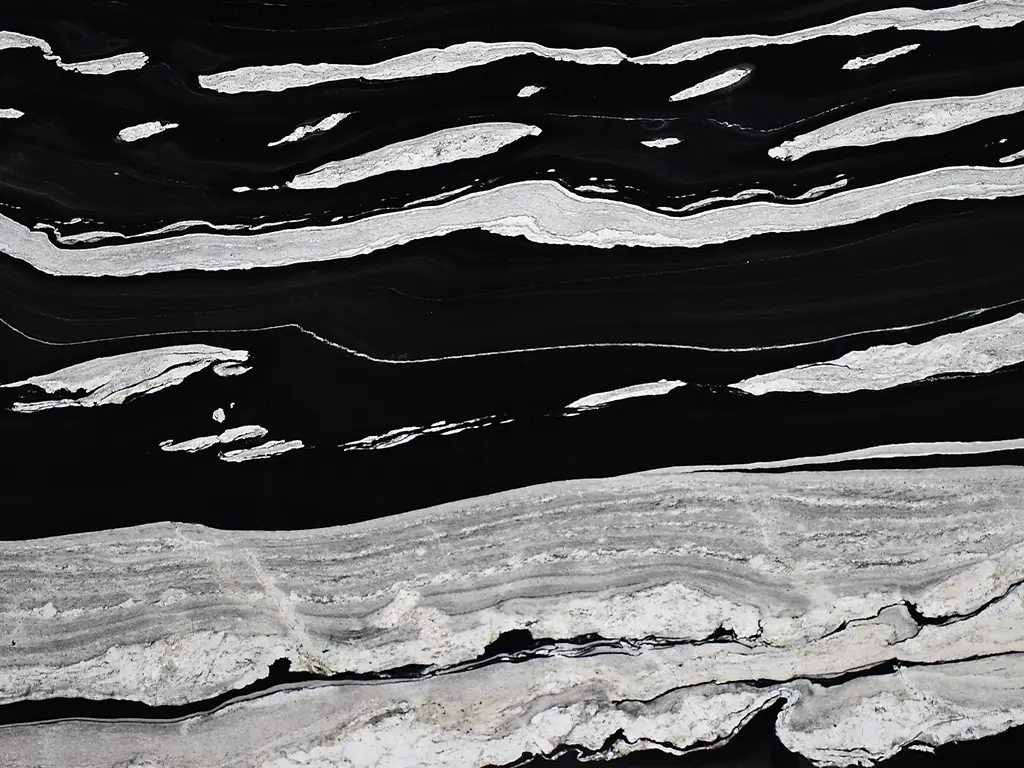

Sculpted by the dynamics of the Earth’s crust, Copacabana Granite reveals its metamorphic origin through a striking foliated structure. Copacabana features a rhythmic alternation between the white of recrystallized quartz and the deep gray of biotite. Each slab is a visual record of millennia of pressure, offering architects an aesthetic of fluid movement and natural contrast that transforms any space with geological sophistication.
Every detail in natural stone comes from the perfect mix of minerals, creating colors, veins, and textures that can’t really be copied. It’s a natural formation that holds the story of the Earth, shaped over millions of years.
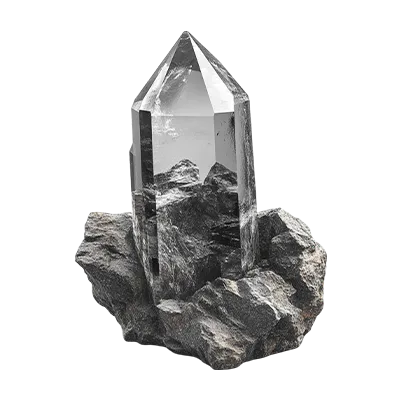
A very common mineral in the continental crust made of pure silica. It is essential in granites, sandstones, and quartzites and is known for its high hardness and glassy shine. It is highly resistant to weathering and forms beach sand. It comes in many colorful varieties, like amethyst, and is important for making glass and watches.
The most abundant mineral series in the Earth’s crust, part of the feldspar family. Their chemical composition includes sodium, calcium, aluminum, and silica. They are important for classifying igneous rocks and range from white to gray. They are commonly found in basalts and granites and usually show fine, typical striations on their crystal surfaces.
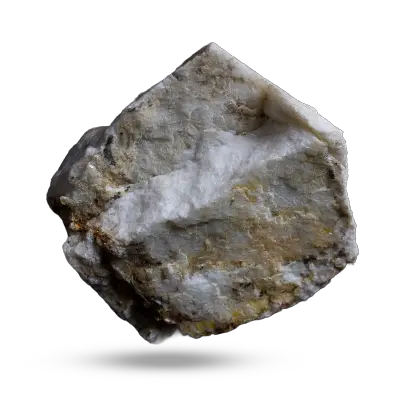
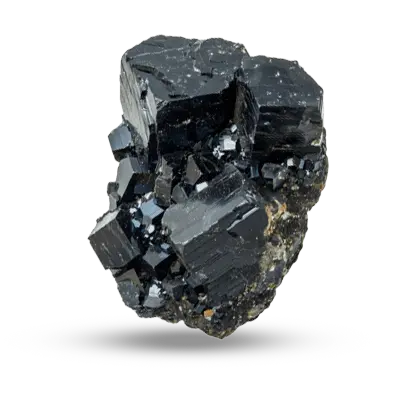
Biotite – rich in iron, magnesium, and potassium. It is commonly found in igneous rocks like granites and in metamorphic rocks like gneisses. Its perfect cleavage allows the mineral to peel into thin, flexible, and elastic sheets. Its dark color and glassy shine are very typical visual traits in rocks from the Earth’s crust.





marketing@santonio.com.br
+55 28 2102 1920
+55 28 9 9884 9666
Rod. Camilo Cola, Km 7,221 Monte LíbanoCachoeiro de Itapemirim, ES CEP 29.308-500 – Brasil